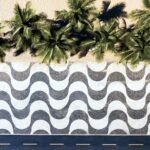
What are we if not mere dots of light floating on a magnetic curved surface, composing a beautiful ever changing picture? Dots combining and creating new dots, dots aggregated in small and large squares, dots dancing and tracing their existence.
Throughout history, different artistic movements have tried to define art’s purpose through form. Aestheticism, conceptualization, experimentation, self-suficiency, utilitarianism, etc. The list is long. Regardless of the philosophical differences on the purpose of art between these movements, it’s undeniable that art’s purpose is defined by how it relates to life. After all, art cannot be dissociated from the artist.
The image, as Sartre would say, is an intentional act of the consciousness. It’s awareness. How consciousness is created in the brain is a much different and complicated science. However, recognizing that on a first-person perspective we have awareness based on our own experiences is trivial. These experiences, acquired throughout our life trajectories, whether tormented or filled with sunshine, help shape our state of existence.
With the objective of savoring life and its collection of experiences, we embrace art and creativity as form of self-expression, analysis, and connection. There is nothing more intimate than a work of art for it reveals to the world portraits of imaginaries without transitions or translations. Art is thought materialized.
“I construct lines and color combinations on a flat surface, in order to express general beauty with the utmost awareness. Nature (or, that which I see) inspires me, puts me, as with any painter, in an emotional state so that an urge comes about to make something, but I want to come as close as possible to the truth and abstract everything from that, until I reach the foundation (still just an external foundation!) of things… I believe it is possible that, through horizontal and vertical lines constructed with awareness, but not with calculation, led by high intuition, and brought to harmony and rhythm, these basic forms of beauty, supplemented if necessary by other direct lines or curves, can become a work of art, as strong as it is true.”